Technology as a Strategy- Lessons from the Defense Industry
For decades, the defense industry has let tech carve the path and trusted results to follow. It’s a perspective businesses could learn from.


The F-117 Nighthawk stealth fighter re-defined air force capabilities at the time. It became a legend and it did show how in defence new capabilities can be defined and developed.
Well, it didn’t start with a business case. Defence is not really ROI-oriented business.
But neither did Amazon Web Services nor Spotify’s streaming platform start from ROI-calculation.
Instead in both cases technology took the lead.
For decades, the defense industry has embraced this mindset. Technology leads the way and results follow. This is a perspective that challenges businesses addicted to ROI and waterfall-based rigid plans. Methods that guarantee you'll miss the next disruption
The Blind Spot of ROI Calculations
We live in a world ruled by the business case. Every investment hinges on ROI. Development projects rise or fall by payback periods. Business case first, no exceptions.
I've been there. Estimate costs, add 30%, acquire permission and leave the calculations for the higher management.
The process is tuned for minimizing the risk, not for maximizing the impact.
This mindset just polishes what’s already there. It does not allow challenging the status quo. The result is tweaking processes, automating routines, trimming costs. A small gain here, a slight edge there, but nothing really changes. Because change is uncomfortable. And risky.
Spotify’s rise tells a different story. They didn’t aim to sell CDs “more efficiently”. Instead, they foresaw where the rapid development of technology was taking us and on that ground reimagined how we consume music in future.
Streaming wasn’t a safe bet, far from it. Record labels and analysts scoffed at its potential. Yet Spotify trusted the technology to deliver results, and now it’s biggest in the industry.
In today’s rapid development of technology sticking in the status quo won’t hold a market. The emerging tools unlock possibilities we can’t yet fully see. Sticking to ROI-driven thinking not just risks missing the next big shift. It ensures it.
The Defense Industry's Model of Innovation
The defense industry has spent decades developing and utilizing technology without immediate use cases. Defense is free from ROI-calculations on this end.
DARPA (US Defense Advanced Research Projects Agency) director George H. Heilmeier developed what became known as Heilmeier's Catechism. It consists of eight questions including: "Why now? What if we succeed? What makes this possible now?"
These questions are valuable because they don't ask how to finetune the status quo. Instead they ask should we rebuild this from the ground up. And if we do, do we have the tools for it, and would we succeed. In practice, this thinking results in maximizing the impact.
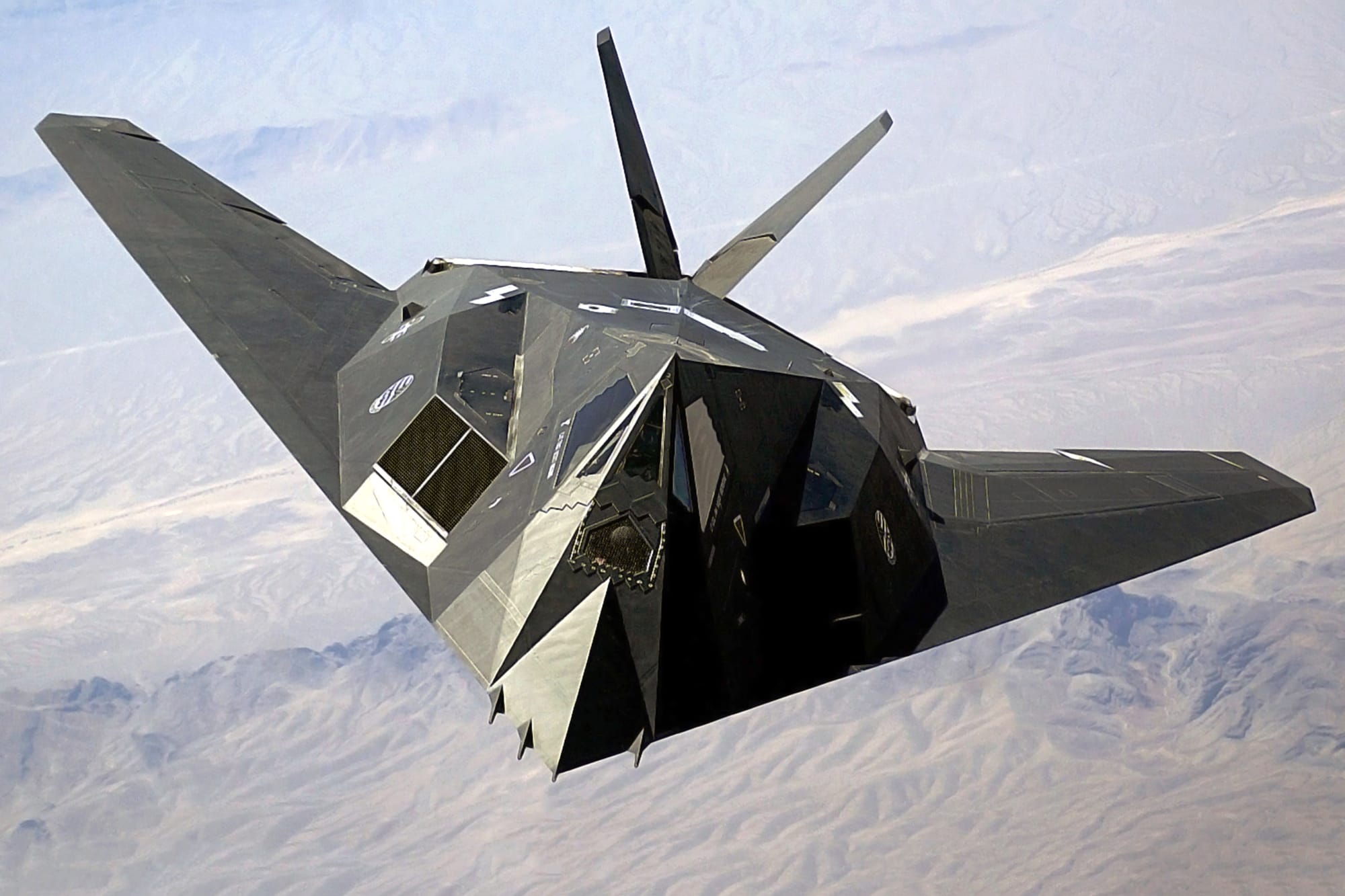
Lockheed Martin's Skunk Works (Advanced Development Programs) took this thinking to the extreme and developed the F-117 Nighthawk stealth fighter, that revolutionized air warfare. Instead of meeting existing needs, they started with the premise that technology can enable something entirely new. Something seemingly impossible.
They took the bold way. With the aid of computer-aided design and novel materials, they engineered stealth technology, and made the F-117 Nighthawk virtually undetectable by radar.
Unit founder Kelly Johnson reportedly said, "If you ask for permission to do something new, the answer is always no.". We all know this. Acquiring permission requires ROI-calculations and risk-assessments. We would be back to square one.
Rather than waiting for permission to execute a major plan, the unit just went forward and developed technologies that exceeded all existing expectations. In doing so, they developed technology that set new standards. The results became the requirements themselves. Nobody knew them upfront. How could they? They stepped into the unknown.
They took the lead.
Fortune Favors the Bold
Transforming to technology-driven thinking requires a fundamental shift in how business-oriented organizations operate. ROI-driven organizations on quarterly-based calculations won't cut it.
The real crux is to accept the uncertainty and the inherent risk within. Accepting that makes every day a day of unknown instead of a day of pre-calculated outcomes. And if you accept not to know what comes next, you allow yourself to find and create. And that is what it takes to stay ahead in the world that technology continuously reshapes.
If you're not prepared to challenge traditional business-driven thinking, someone else will.